
Event Category: Events
Polarisation and Spread of Misinformation on Social Media
Organiser(s):
Prof. Dr. Faisal Shafait, National University of Sciences and Technology
Date: 3rd January, 2023
Time: 11:00 am to 12:00 pm
Venue: SINES (next to NSTP), NUST H-12 Campus
Brief Description
Contrary to expectations that the increased connectivity offered by the internet, particularly Online Social Networks (OSNs), would result in a broad consensus on contentious issues, we instead frequently observe the formation of polarised echo chambers, in which only one side of
an argument is entertained. These can progress to filter bubbles, actively filtering contrasting opinions, resulting in vulnerability to misinformation and increased polarisation on social and political issues. These have real-world effects when they spread offline, such as vaccine hesitation and violence. Our work seeks to better understand how echo chambers manifest in different discussions dealing with various issues over an extended period.
About the Speaker
Dr Mehwish Nasim is a Lecturer(Assistant Professor) in Computer Science at The University of Western Australia (UWA), where she teaches Advanced Algorithms and Artificial Intelligence. She also leads the Network Analysis and Social Influence Modeling lab at UWA. Dr Nasim has a PhD in network analysis from the University of Konstanz, in Germany. Her research lies at the intersection of applied mathematics and social sciences. Dr Nasim is particularly interested in social cyber security, explainable AI, combating online misinformation during population-level events, and designing serious games including some aspects of wargames. In addition to that, she is working on digital healthcare, particularly for emergent users.
Collaborator(s)
1. National University of Sciences and Technology (NUST):
https://ncai.nust.edu.pk/wp-content/uploads/2020/03/cropped-cropped-cropped-cropped-
cropped-nust-png-1.png
2. Deep Learning Lab (DLL): https://dll.seecs.nust.edu.pk/wp-
content/uploads/2021/01/dll-logo25X100.png
3. National Center of Artificial Intelligence (NCAI): https://dll.seecs.nust.edu.pk/wp-
content/uploads/2021/12/NCAI_LOGO-removebg-preview.png
For more information and event detail, please visit:
https://dll.seecs.nust.edu.pk/events/talk-on-polarisation-and-spread-of-misinformation-
on-social-media/
For any queries, feel free to email at [email protected]
Talk on Connecting Language and Vision: Hierarchical Image Classification
Organizer(s):
Dr. Muhammad Imran Malik, National University of Sciences and Technology
Date: 23rd December 2022
Time: 09:30 am to 10:30 am
Venue: SEECS Seminar Hall
Brief Description
Multi-level hierarchical classification addresses the problem of classifying items into a multi-level hierarchy structure of classes. For example, an image of a ‘cat’' can be classified into `biological organism’', `animal’, and `cat’', depending on the taxonomy used. While there have been several methods proposed to solve this problem, they still suffer from several drawbacks. In particular, most existing methods: (i) do not embed the taxonomy structure used, (ii) use a complex backbone neural network with 'n$ disjoint output layers that do not constraint each other, and (iii) consequently, may output predictions that are often inconsistent with the taxonomy in place. This lecture addresses these deficiencies by introducing a novel mask- based output layer for multi-level hierarchical classification. Specifically, this lecture will cover a model-agnostic output layer that embeds the taxonomy and that can be combined with any
model.
About the Speaker
Imran Razzak is a Senior Lecturer in Human-Centered Machine Learning and a Postgraduate Research Coordinator at the School of Computer Science and Engineering at the University of New South Wales, Sydney, Australia. Previously, he was a Senior Lecturer in Computer Science at Deakin University, Geelong, Australia. He is an Associate Editor of IEEE TNNLS, IEEE TCSS, and IEEE JBHI. He has attracted research grants of more than 1.5 million AUD. His area of research focuses on connecting language and vision for better interpretation. It spans three broad areas: Machine Learning, Computer Vision and Natural Language Processing with particular emphasis on healthcare.
Collaborator(s)
1. National University of Sciences and Technology (NUST):
https://ncai.nust.edu.pk/wp-content/uploads/2020/03/cropped-cropped-cropped-cropped-
cropped-nust-png-1.png
2. Deep Learning Lab (DLL): https://dll.seecs.nust.edu.pk/wp-
content/uploads/2021/01/dll-logo25X100.png
3. National Center of Artificial Intelligence (NCAI): https://dll.seecs.nust.edu.pk/wp-
content/uploads/2021/12/NCAI_LOGO-removebg-preview.png
For more information and event detail, please visit:
https://dll.seecs.nust.edu.pk/events/talk-on-connecting-language-and-vision-hierarchical-image-
classification/
For any queries, feel free to email at [email protected]
A one day workshop on Data Driven Resilience for Small Catchments in Pakistan
The goal of this workshop is to bring research scientists from academia and government agencies and organisations for a holistic approach towards data-based resilience in rainfed watersheds and effective management of small water reservoirs. This is a first in a series of three workshops sponsored by our DAAD project under a consortium of NUST, LUMS, NAMAL and University of Hamburg, Germany. The focus is on catchments with limited sensing that are prone to torrential flooding and how effective forecasting and modeling can help prevent disasters. The problem is significantly important given the looming climate crisis. We intend to seek input from government agencies and research scientists by having panel discussions to discuss the current state of governance, priorities, and vision of small dams in the national landscape of Pakistan. There will be talks on the following topics:
- The socio-economic significance of effective management of small dams.
- Current state of small dam operations in Pakistan
- Impact of climate change on torrential flooding
- Development, deployment and operation of an in-situ observation network.
- Data-based modelling and prediction of reservoir response to storm events.
Who Should Join?
1. Scientists and Engineers from Govt Agencies and Other Research Organisations related to Water Resources and Dams Managements, Climate Change, Meteorology, GIS, Environmental Sciences, Agriculture etc.
2. Students working in above areas
Registration
The workshop will be held on Dec 22, 2022. Register using the QR code below
Last date of registration is Dec 19, 2022. Workshop details can be found at Workshop Details
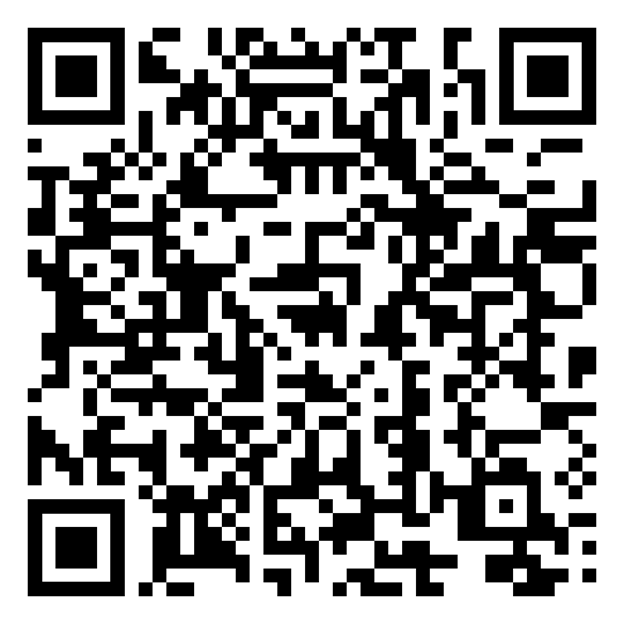
For more information, please visit https://sites.google.com/view/ddr2022nust or contact [email protected]
Artificial Intelligence in Medicine (AIMeD) Workshop
Machine Vision and Intelligent Systems Lab at NUST SEECS is organizing the 3rd CureMD Artificial Intelligence in Medicine (AIMeD) Workshop, in collaboration with CureMD USA, on 4th Oct 2022. The Venue is SEECS Seminar Hall.
Focus and Objective
This three track workshop is focused on discussing Feature Engineering, Knowledge Engineering, Inferencing and Explainability in applying AI techniques for processing of Structured and Unstructured Medical Records, with the goal towards developing solutions which can assist clinicians to make more informed cancer management decisions for personalized healthcare.
Workshop Schedule
The workshop schedule is given below.
| Track | Session | Authors | Time Slot (PKT) | |||
|
1 |
Knowledge Engineering |
1 |
Knowledge Engineering for Medical Knowledge Extraction | Haniya Akhtar, Muddassar Farooq |
10:15 AM |
11:00 AM |
|
2 |
Extracting Cancer Phenotypes from Unstructured Medical Records | Saad Ahmad Khan, Muhammad Moazam Fraz |
11:00 AM |
11:45 AM |
||
|
3 |
Towards building Knowledge Graphs for Personalized Healthcare |
Amna Basharat |
11:45 AM |
12:15 PM |
||
| Tea Break | 12:15 PM | 12:30 PM | ||||
| 2 | Feature Engineering, Inference, and Explainability |
4 |
Incorporating Oncology Domain Knowledge into the Feature Engineering and Treatment Failure Prediction Pipelines |
Muhammad Usamah Shahid, Muddassar Farooq |
12:30 PM |
1:15 PM |
|
5 |
Identification of Nonlinear Indices to Predict Time-to- Treatment Failure in Oncology using EMR Data |
Ahsan Naseer, Muhammad
Zubair Bukhari, Imran Akhtar, Ahmad Saeed |
1:15 PM |
2:00 PM |
||
| Lunch + Prayer Break | 2:00 PM | 3:00 PM | ||||
|
6 |
User-Centered Explanations for Med Predictions |
Muhammad Hamza, Asfand Ali
Irfan, Mirza Omer Beg |
3:00 PM |
3:45 PM |
||
| 3 | Emerging Healthcare Technologies |
7 |
Data Lakehouse Engineering for Aiding in the Predictive Process of Treatment Failure for Cancer Patients |
Fizza Tauqeer, Muhammad Abdullah Hafeez, Muddassar Farooq |
3:45 PM |
4:30 PM |
|
8 |
Securing Healthcare Data through Searchable Encryption |
Aiman Sultan and Shahzaib Tahir |
4:30 PM |
5:00 PM |
||
| Tea + Prayer Break | 5:00 PM | 5:15 PM | ||||
|
9 |
LAM detection using fiber cavity attenuated phase shift spectroscopy and functionalized tapered fiber |
Ubaidullah, Bakhtawar, Muddassar Farooq, Basit Yameen, Imran Cheema |
5:15 PM |
6:00 PM |
||
Organizer
Dr Muhammad Moazam Fraz,
Associate Professor, HoD AI & Data Science
NUST SEECS.
______________________________________
Design of a Digital Transmission System for Quantum Channels
Brief DescriptionQuantum communication is an allied discipline of quantum computing, both falling under the domain of applied quantum physics. The area has found significant attention over the past few years as it has great potential in cryptography and solving large and complex mathematical problems. The underlying computing-based operations are quite different from classical computers as the underlying storage utilizes the concept of a qubit rather than a bit. Similarly, the underlying communication system utilizes the concept of particle nature of light rather than classical communication using EM-waves. The talk’s objective would be to motivate students and researchers toward developments in the area. The talk will be directed towards electrical engineering and computer science students in particular. The talk will also cover some aspects of an ongoing study on the utilization of BCH and Polar codes on quantum-channels.
Speaker Profile:Dr. Omar Usman Khan is the Director of Campus and Associate Professor at FAST-NUCES Peshawar. He joined the department in 2014 after completing his Postdoctoral Fellowship under the DyNanoMag project, funded by the Italian Ministry of Education, University and Research, where he worked on the development of computational tools for spintronic/magnonic devices, working in the field of computational micromagnetics. His broader area of research is scientific and high-performance computing, information theory, computational linguistics, wireless networks, modeling and simulation, signal processing, and computational graph theory. He completed his Ph.D. in Control and Computer Engineering from Politecnico di Torino, Italy in 2013, under the supervision of Prof. Carlo Ragusa and Dr. Bartolomeo Montrucchio, and funded by the HEC under the HRDI-UESTP Project.
LocationDate: September 20, 2022 | (Tuesday)Time: 11:00 am – 12:00 pmVenue: SEECS Seminar Hall, NUST, H-12Collaborators
Organizers:Dr Hasan Ali KhattakDr Muhammad Moazam Fraz
For any queries, feel free to email on [email protected]
4th Quarterly Industrial Event Showcase of Projects to the Market Industry
The industry event is being organized by Deep Learning Lab (DLL) to showcase the on-going projects to the market industry. The aim of the event is to assess the commercialization potential of the projects being conducted under DLL and have an industry exposure about the relevant products. The event will help in setting the right platform for academia industry linkages and gain better knowledge about the end-user requirements so the research can be steered in the right direction.
Emerging Technologies in Artificial Intelligence
Deep Learning Lab, National Center of Artificial Intelligence NUST along with international collaboration is bringing forth an opportunity to gain insights into the latest technologies and trends in Artificial Intelligence from the AI experts. Talks and discussions will be hosted between the students and the German Professors. The students are encouraged to participate and utilize this platform to gain exposure to recent research trends and ideas.
Venue: SEECS Seminar Hall
Timings: September 14, 2022 | 9:00 am to 1:00pm
Organizer: Dr. Faisal Shafait (SEECS), Dr. Muhammad Imran Malik (SEECS) and Dr. Adnan ul Hasan (DLL, NCAI)
For More Details Click Here
Profiles of German Professors (Speakers)
Prof. Ulrich Schwanecke is working as a professor at RheinMain University of Applied Sciences since October 2003 where he is leading Metaverse and Mixed Reality Research Group. He received his master’s degree in mathematics and Computer Science from the Johannes Gutenberg University Mainz in 1997. From 1997 to 2000 he worked as a research assistant at TU Darmstadt from where he received his Ph.D in 2000. Subsequently, he held a postdoctoral position for one year at the Max-Planck Institute for Computer Science in Saarbrücken. From 2001 to 2003 he worked as a researcher at Daimler AG in Ulm.
Prof. Dr. Adrian Ulges is working as a professor at RheinMain University of Applied Sciences (HSRM) since 2013 where he is leading Computer Vision group. He graduated from TU Kaiserslautern. He received a diploma in computer science in 2005. In 2009, he completed his Ph.D in computer science. He has remained an active researcher at the German Research Center for Artificial Intelligence (DFKI) in Kaiserslautern Germany from 2005 till 2011. His research interests are in machine learning, computer vision, and multimedia analysis. He worked with Google as an intern in 2005, at Mountain View and as a visiting scientist in 2011 in Zurich. Adrian’s work has been awarded a Google Research Award in 2010, and his publication record includes over 30 peer-reviewed papers.
Dr. Christian Weis is a Senior Researcher in Technical University of Kaiserslautern (TUKL) and is working in Microelectronic System Design Research Group since 2009. He has received the Ph.D. degree in electrical engineering from the TU Kaiserslautern, Germany, in 2014. From 1996 to 1998, he was with Mitsubishi Semiconductor Europe, Germany, where he was engaged in the design and development of microcontrollers. From 1998 to 2009, he was with Siemens Semiconductor, Infineon Technologies AG and Qimonda AG, Munich, Germany, in DRAM design. During this time frame, he was involved in DRAM design for graphics and commodity DRAM products. In 2006, he was a Design Team Leader for the 1Gb DDR3 DRAM, the first DDR3 volume product at Infineon/Qimonda. He holds more than 20 patents related to DRAMs and DRAM design and published more than 70 papers. His current research interests include DRAM controller design, Near- & In-Memory processing, 3D-integrated DRAMs, heterogeneous memory architectures, and MPSoCs.
Student Symposium on Artificial Intelligence (Say Hello to the Future)
We encourage students to inspire creativity and leadership in the discovery of new knowledge that makes a direct difference to people around the world. Deep Learning Lab, National Center of Artificial Intelligence NUST along with multiple collaborators, brings an opportunity to research enthusiasts to interact one-on-one with AI Experts and get their valuable feedback on their research idea.
The students are encouraged to participate and utilize this platform to gain exposure to recent research trends and ideas.
For Details Click Here
Artificial Intelligence in Pakistan: Challenges and Opportunities
Organizers:
● Prof. Dr. Faisal Shafait, National University of Sciences and Technology
Date: September 06, 2022 | (Tuesday)
Time: 3:00 pm – 04:00 pm
Venue: SEECS Seminar Hall, NUST, H-12
Brief Description
AI disrupts every walk of life, e.g., service operation optimization, product enhancement, supply chain management, and manufacturing. One of the most notable benefits of using AI in all those areas is a significant cost decrease – up to more than 50% in some cases. However, the adoption of AI is slow in Pakistan, and it has not been able to penetrate the socioeconomic settings fully. This talk highlights how AI can help solve some fundamental problems in Pakistan and how the Sino-Pak Center for AI is helping achieve these goals.
About the Speaker
Dr. Atif Mashkoor is a senior research scientist at Johannes Kepler University, Austria, a foreign faculty at Pak-Austria Fachhochschule: Institute of Applied Sciences and Technology, Haripur, the founding managing director of the Sino-Pak Center for AI, and an adjunct faculty at ICCBS, Karachi. Previously, he was the Scientific Head at the Software Competence Center Hagenberg GmbH – the Austria center of excellence in software and data science. His research interests include requirements engineering, formal methods, and AI-inspired software engineering. He received a Ph.D. from the University of Lorraine, France, and an M.S. from Umeå University, Sweden. He has also studied computational linguistics at Rovira i Virgili University, Spain.
Collaborators:
National University of Sciences and Technology (NUST):
Deep Learning Lab (DLL):

National Center of Artificial Intelligence (NCAI) :
For more information and program details, please visit
For any queries, feel free to email on